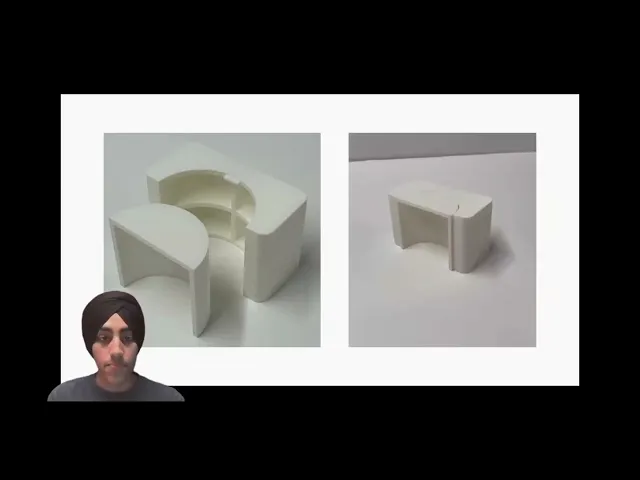
Arco: Transformable Desk for Small-Space Living
Arco is a configurable desk system designed for students living in small spaces, created to help people physically and mentally transition between modes throughout the day.
Role
Product Designer
Industry
Furniture Design
Duration
4 months
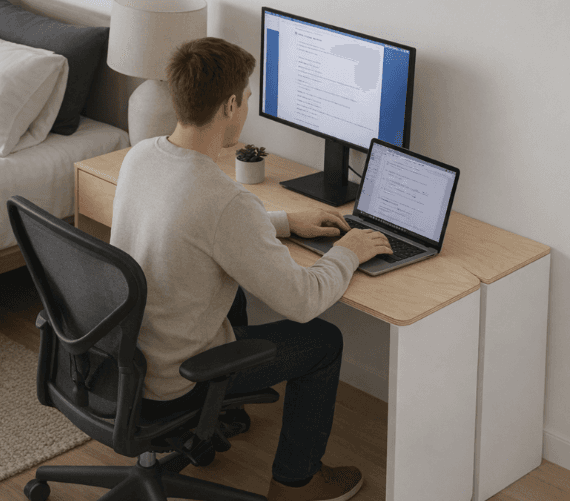
Overview
Challenge
This challenge of this project was to design a piece of furniture that goes beyond storage or surface area to actively shape how people transition between work, rest, and social life in small living spaces. Framed by the Philadelphia Museum of Art’s Collab Competition and the concept of “socially engaged objects,” the project challenged traditional furniture typologies by treating them not as static forms, but as prompts for behavior. The core challenge was to create an analogue, human-centered system that balances function, experience, and meaning—acknowledging that real spaces are dynamic, unpredictable, and shaped as much by human habits as by design intent.
Solution
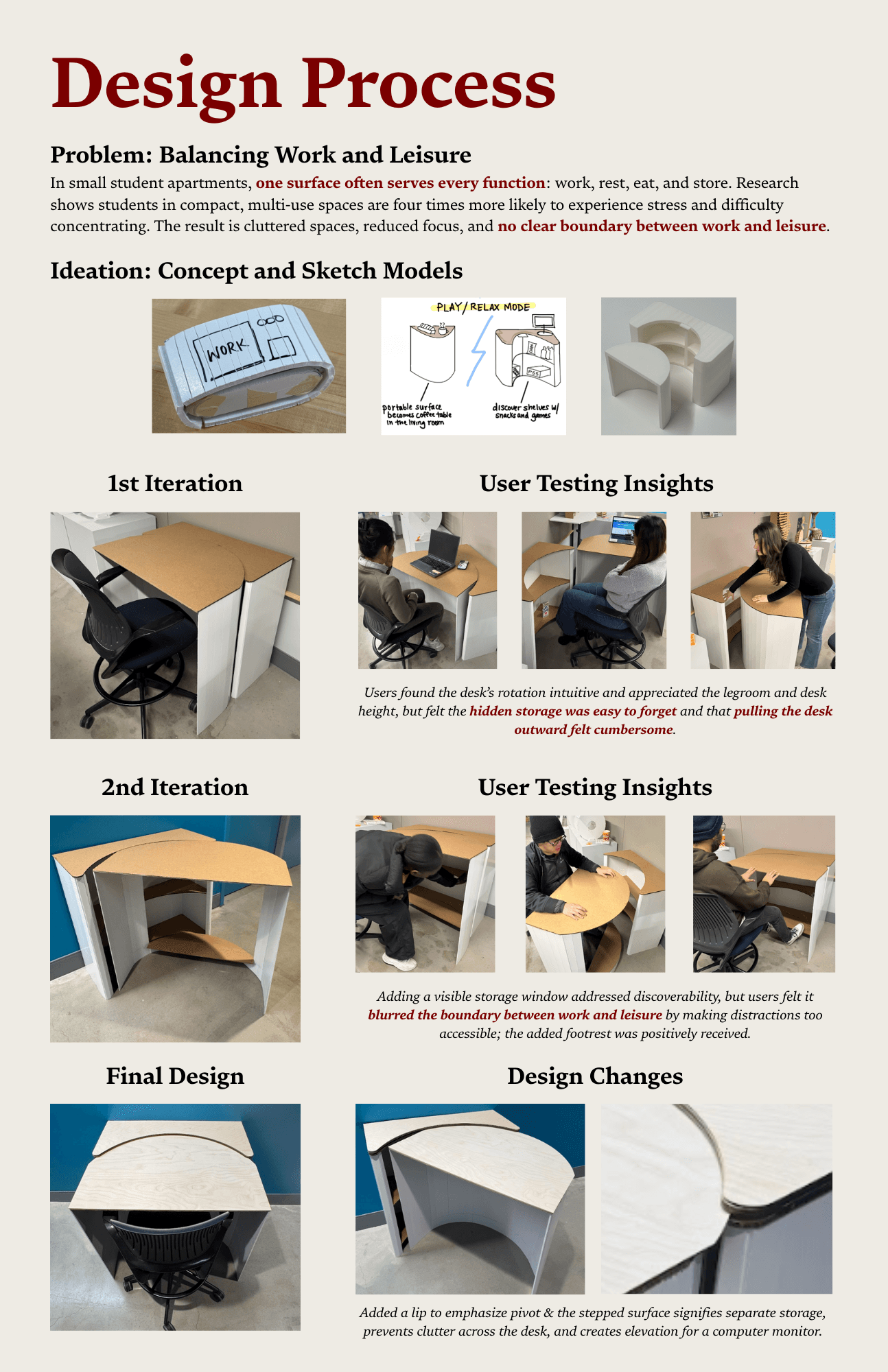
In small student apartments, a single surface is often forced to support every mode of daily life—work, rest, eating, and storage. According to a 2022 study published in the International Journal of Environmental Research and Public Health, university students living in smaller, tighter spaces with poor indoor quality are 4.1× more likely to experience depressive symptoms. Without clear physical or visual boundaries, the mind struggles to shift between productivity and leisure.
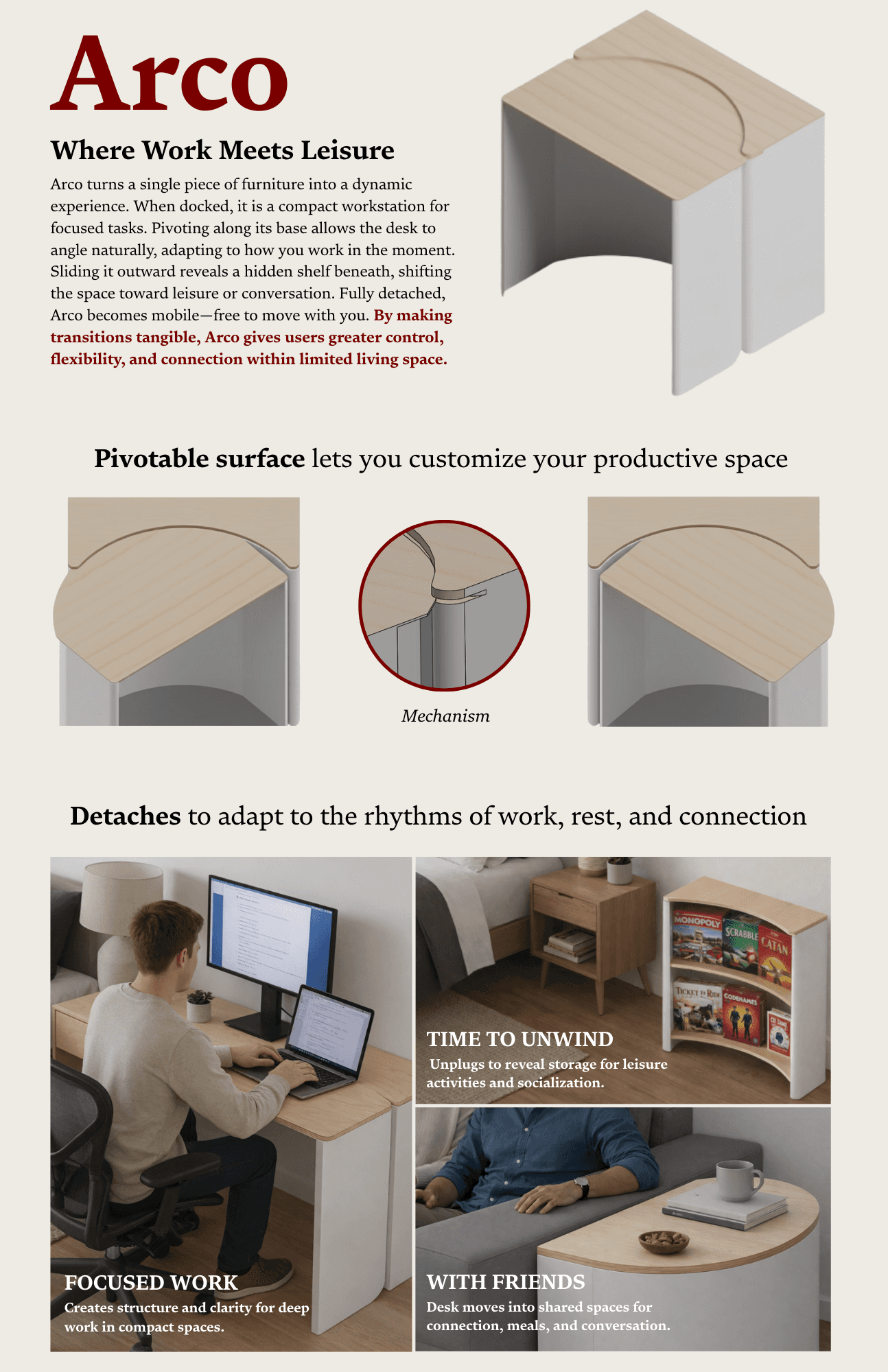
Arco is a transformable desk system designed for students living in small spaces, created to help people physically and mentally transition between modes throughout the day.
When docked, Arco creates a compact workstation that establishes a clear, contained zone for focused work.
Through pivoting and sliding motions, the desk can reorient toward different views, reveal integrated storage, and open the space for leisure or reflection.
In its detached configuration, the surface becomes mobile, allowing it to move into shared spaces and support social interaction.
By introducing physical boundaries and purposeful movement, Arco reduces clutter, clarifies intent, and restores a sense of control—helping a single surface adapt to the realities of small-space living.
User Research
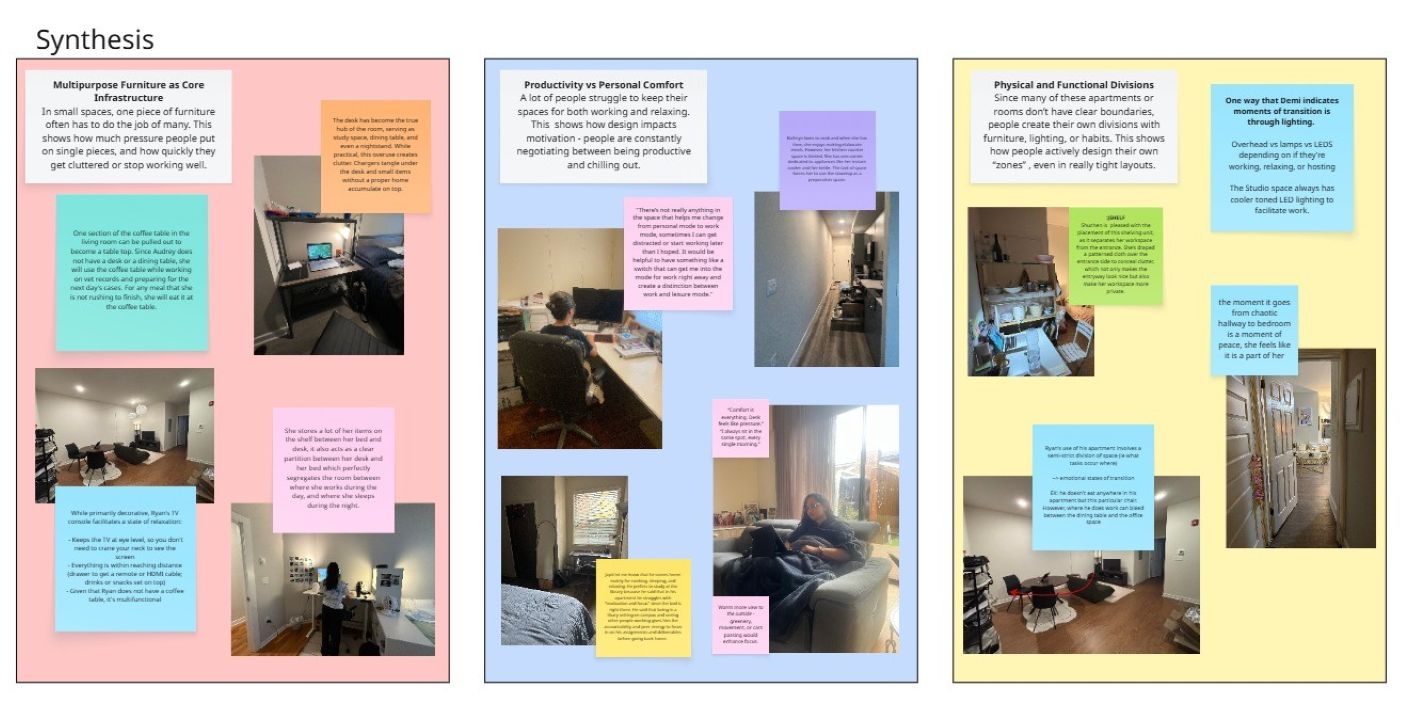
To understand how people navigate work, rest, and daily transitions in small living environments, I conducted 2 in-depth contextual interviews and synthesized insights from conversations with 80+ individuals living in compact, multi-use spaces. Here are the key patterns that emerged:
Theme 1: Multipurpose Furniture as Core Infrastructure
In small spaces, a single piece of furniture often carries multiple roles at once—work surface, storage, dining table, and social anchor—quickly becoming cluttered and difficult to use well.
Theme 2: Productivity vs. Personal Comfort
Participants consistently described tension between staying productive and feeling at ease in their own space, revealing how furniture design directly affects motivation and mental state.
Theme 3: Lack of Clear Boundaries
Without physical or visual cues to separate modes, people struggle to mentally transition between work and rest, often feeling stuck in between.
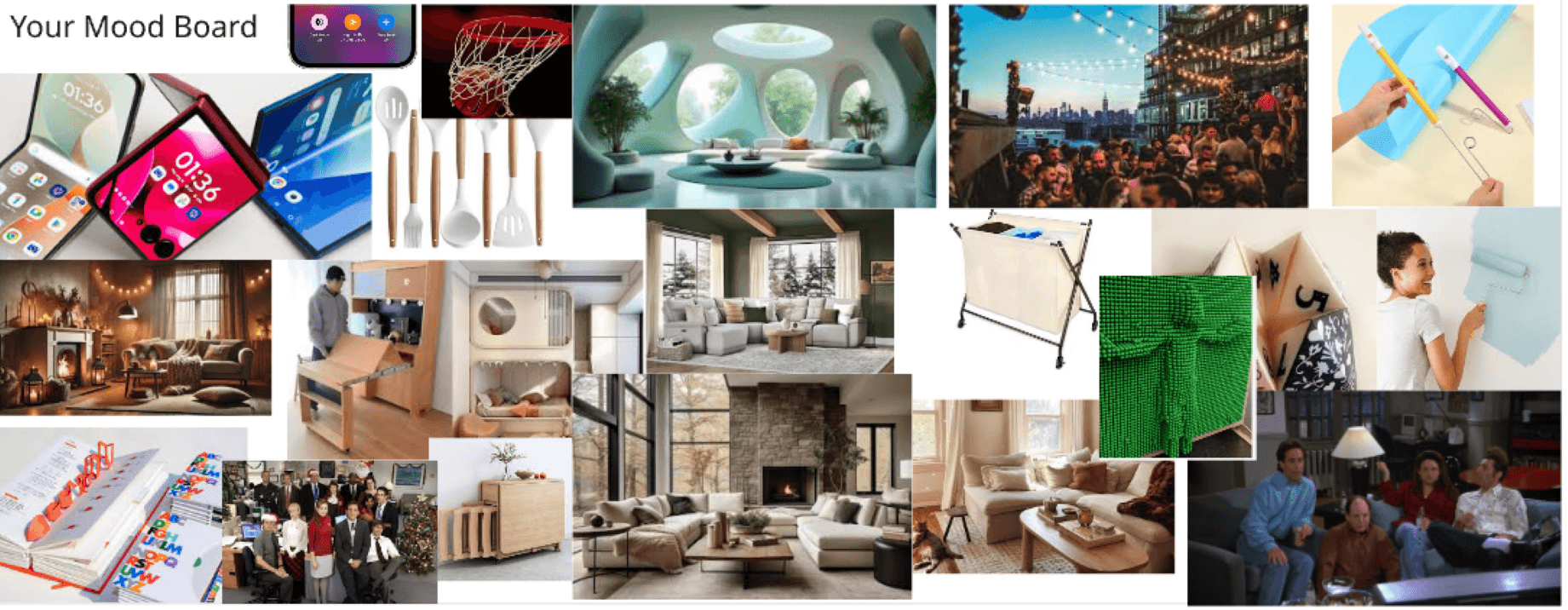
Mood Board:
Initial Brainstorming
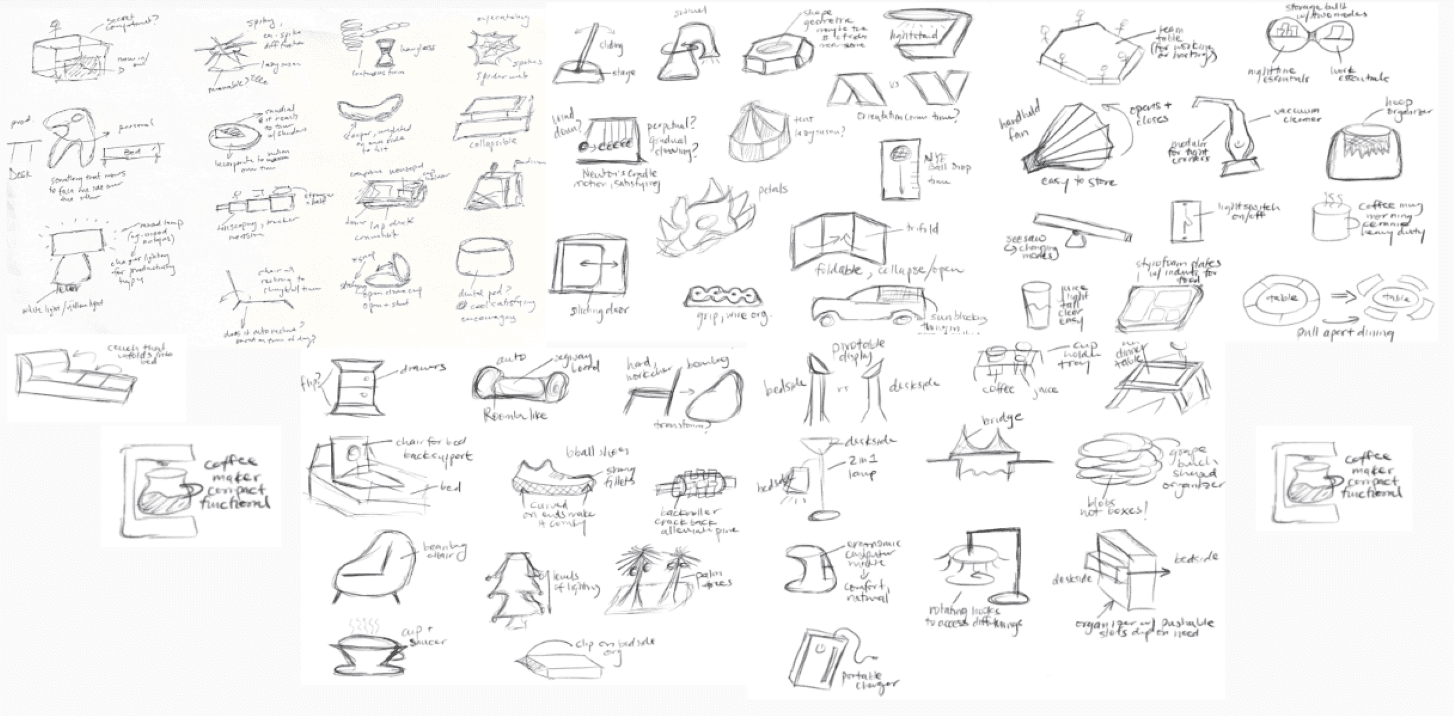
Concept Creation
Concept 1: Rethinking the Surface
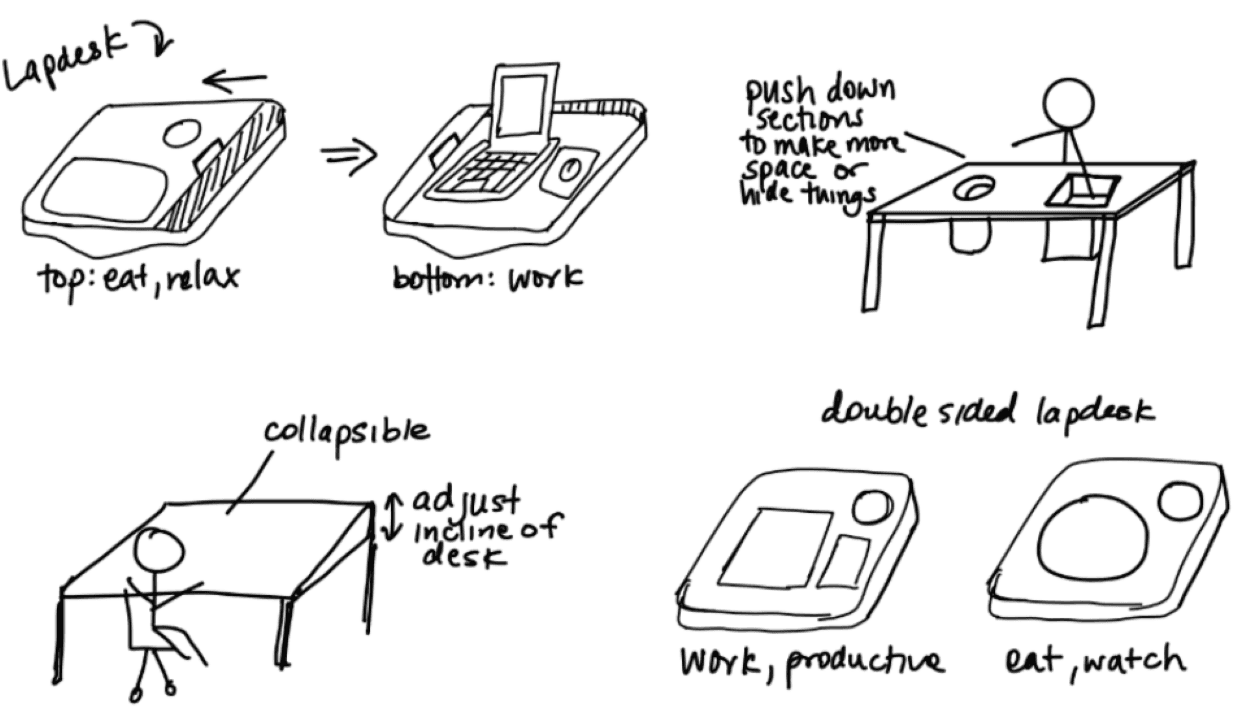
Concept 2: Rethinking the Seating
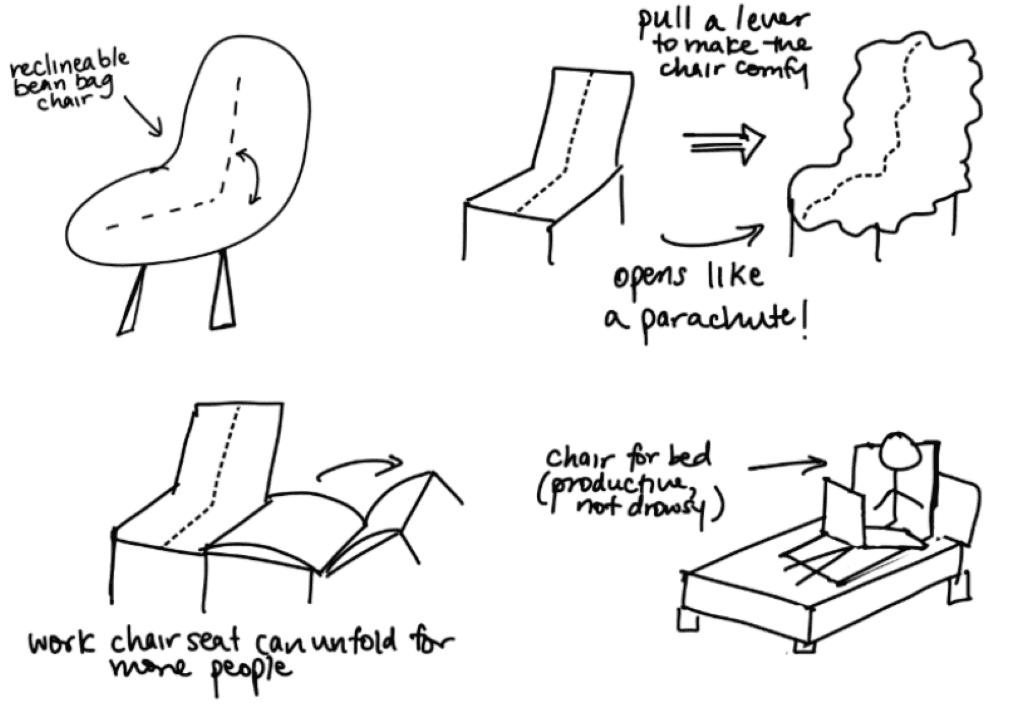
Concept 3: Physical and Functional Divisions
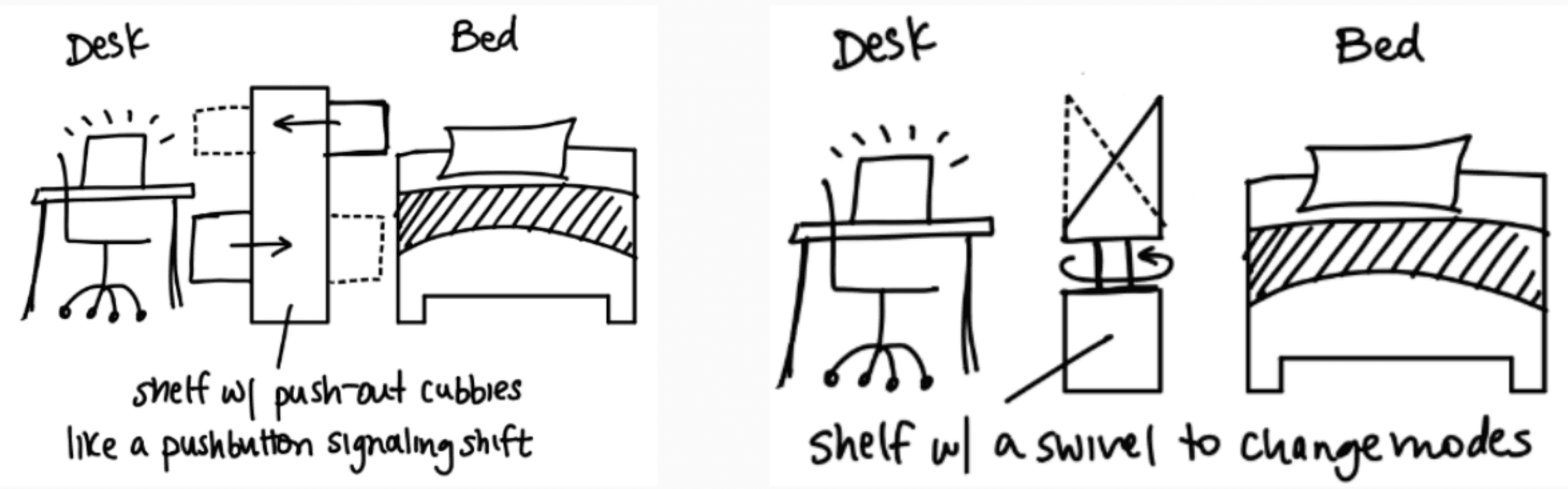
Exploratory Modeling
To translate research insights into physical form, I built 11 exploratory sketch models, using rapid, low-fidelity making to test proportion, interaction, and spatial behavior before committing to a single direction.
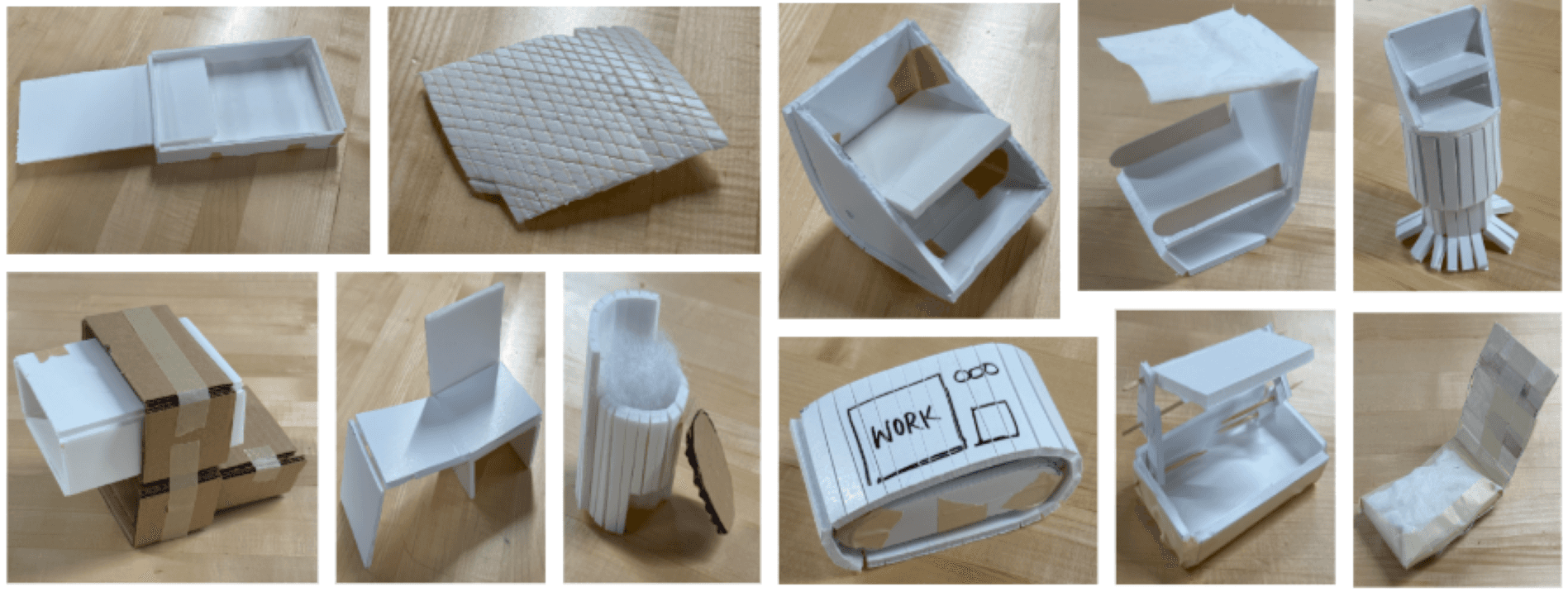
Focused Sketches & Models
Feedback from Peers
Strong enthusiasm for the plug-and-unplug desk as a physical self-regulation tool that makes transitions between work and leisure more intentional.
Positive response to the idea of revealing or concealing items based on context, reinforcing different behaviors at different times.
Interest in the desk’s ability to support multiple uses without becoming visually or mentally overwhelming.
Based on this feedback, I chose to focus the project on a desk-based system, refining it as an adaptable, human-centered solution that could meaningfully support work–life transitions in small living environments.
Iteration 1
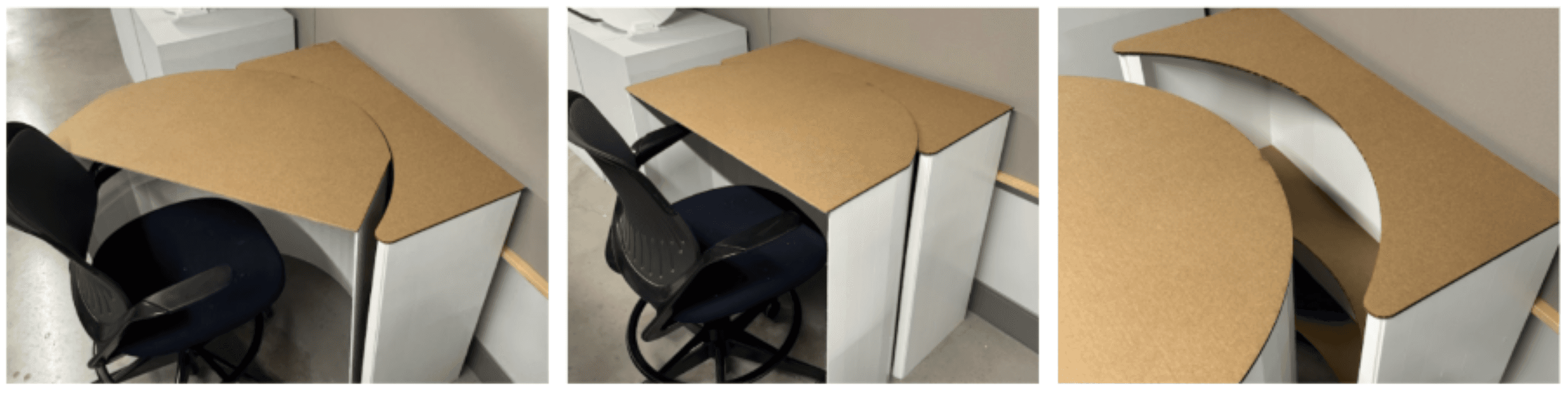
User Testing
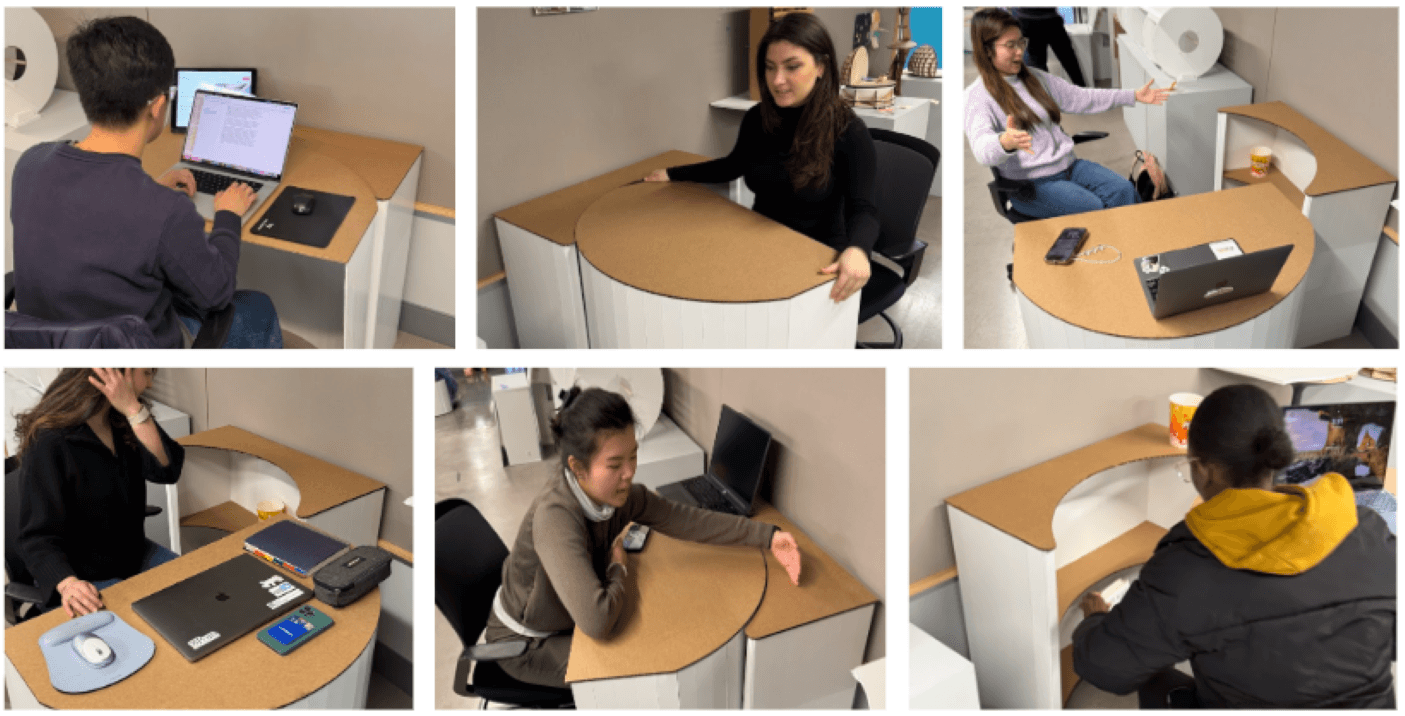
Users found the desk’s rotation intuitive and appreciated the legroom and desk height, but felt the hidden storage was easy to forget and that pulling the desk outward felt cumbersome.
Iteration 2
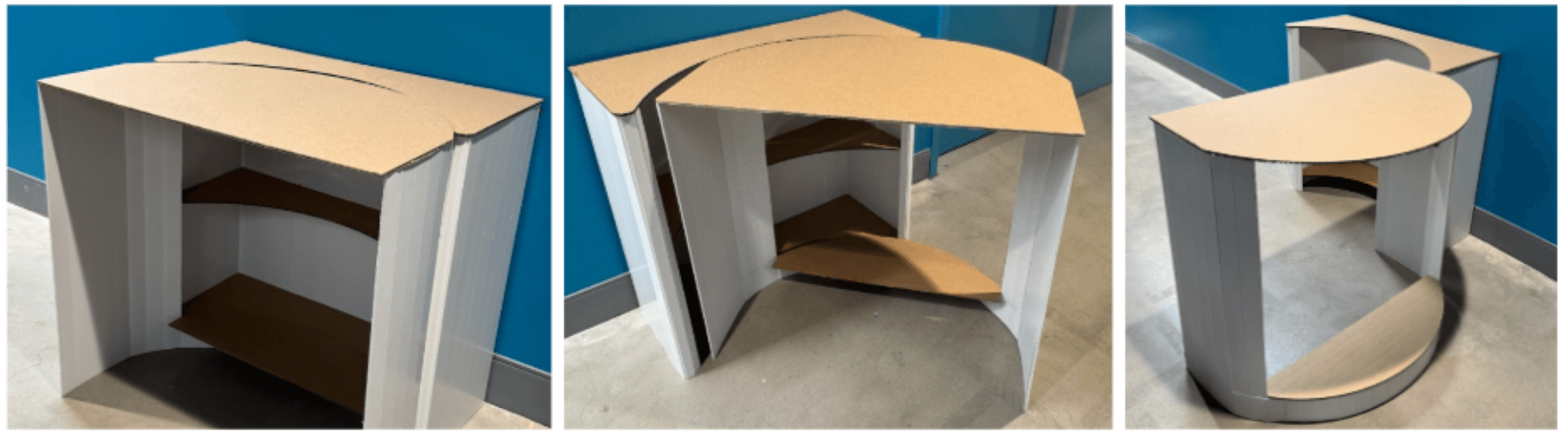
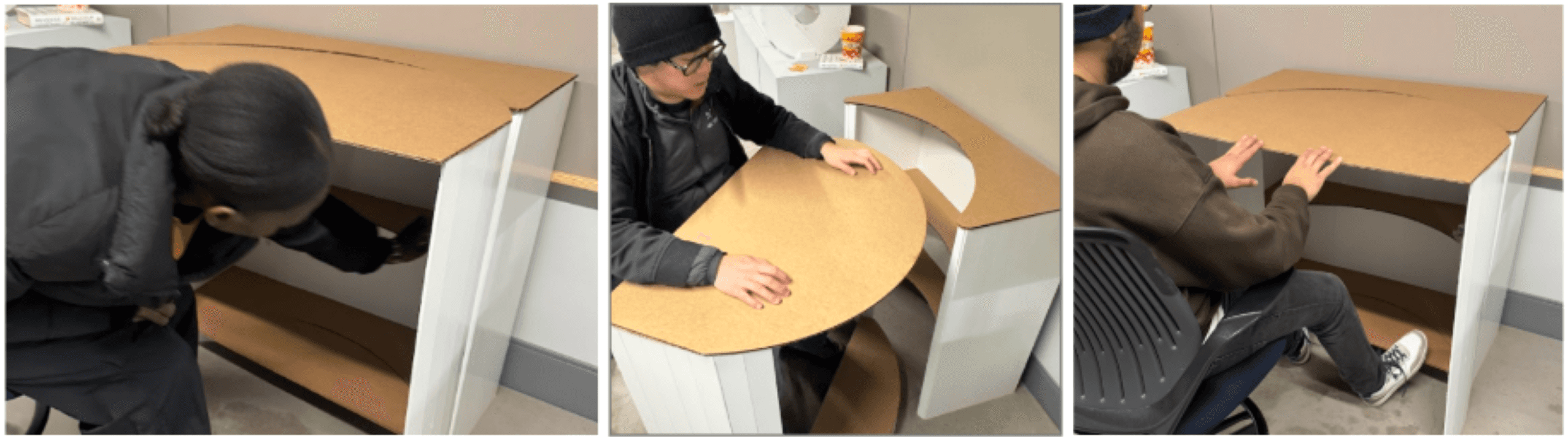
User Testing
Adding a visible storage window addressed discoverability, but users felt it blurred the boundary between work and leisure by making distractions too accessible; the added footrest was positively received.
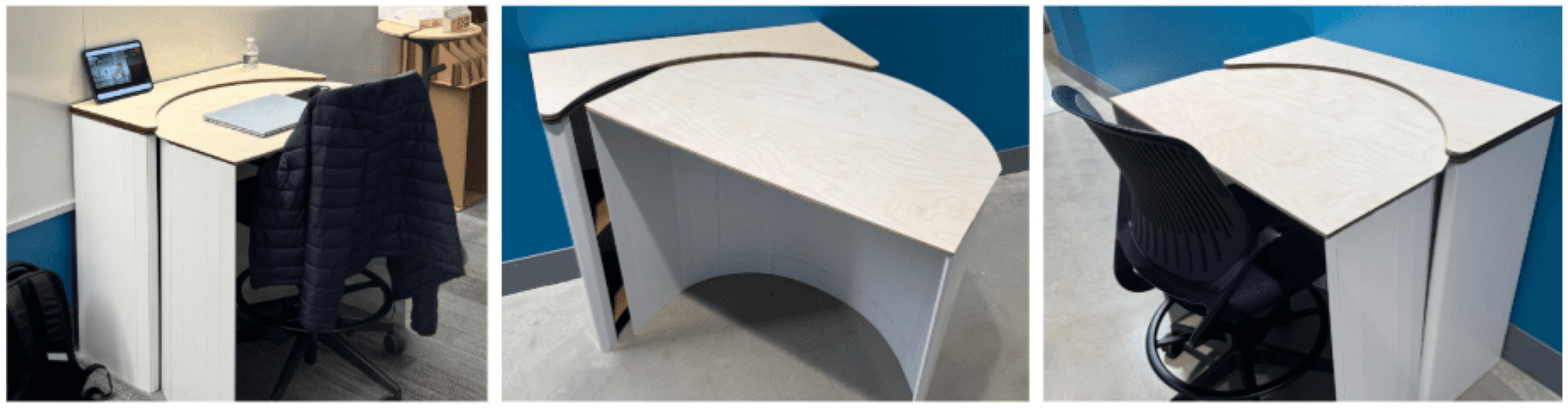
Iteration 3: Final Product & Poster
Other projects
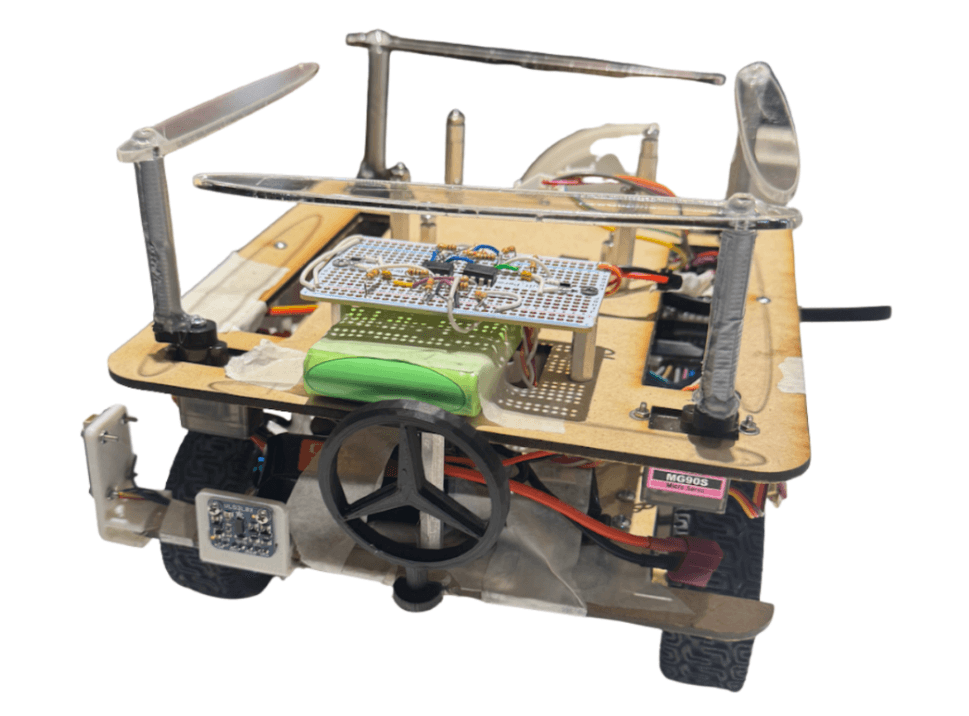
Autonomous Car
Designing and building an autonomous mobile robot with real-time control, localization, and sensing, from system architecture to competition-ready deployment.
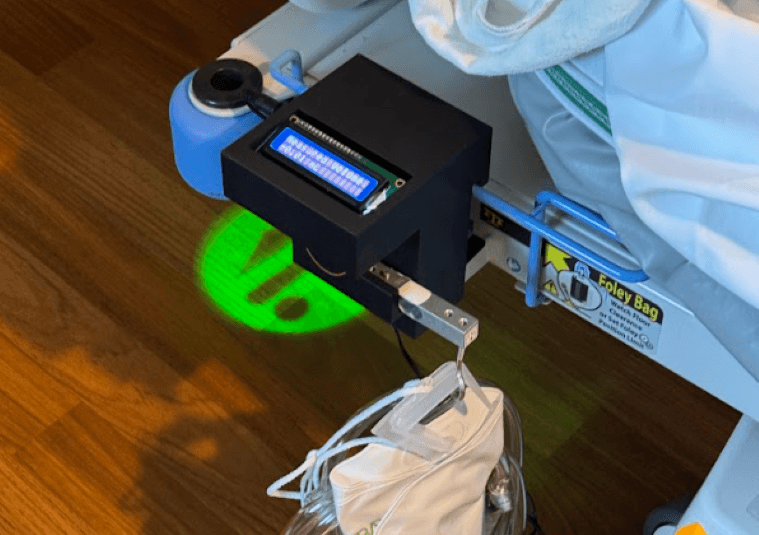
Biofluid Analyzer
Developing a compact bedside urine output monitoring system for critical care, from clinician pain point to deployed prototype and formal pilot study.
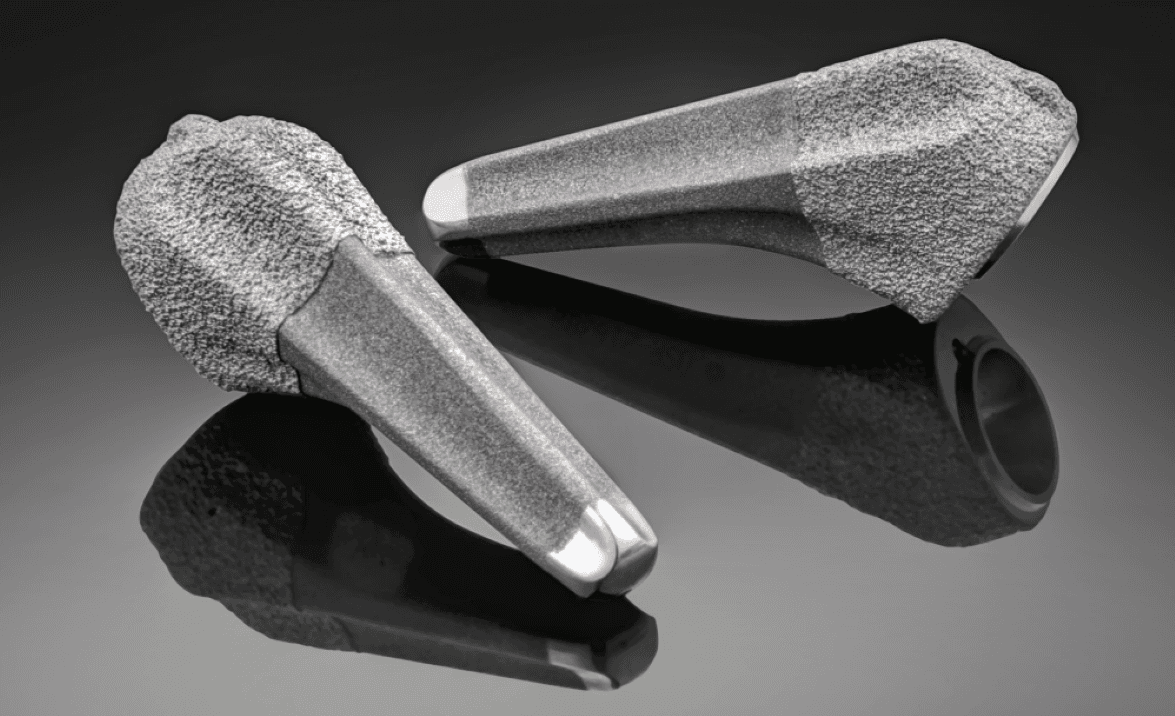
Orthopedic Product Development at Exactech
Led surgeon-driven instrument and implant development across CAD, DFM, testing, manufacturing, and 510(k) support through 7 concurrent projects.

Product Growth at PrimeEventZ
Leading product definition and real-world deployment of PrimeEventZ, an AI-powered platform unifying event operations from planning through execution at any scale.