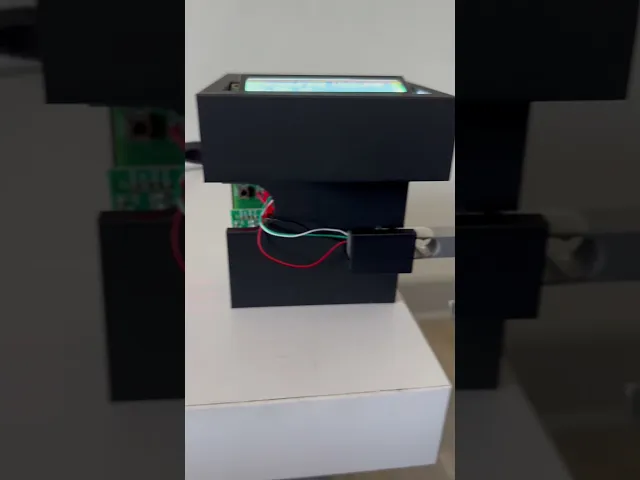
Biofluid Analyzer
Developing a compact bedside urine output monitoring system for critical care, from clinician pain point to deployed prototype and formal pilot study.
Role
Product Lead
Industry
Healthcare
Duration
12 Months
Overview
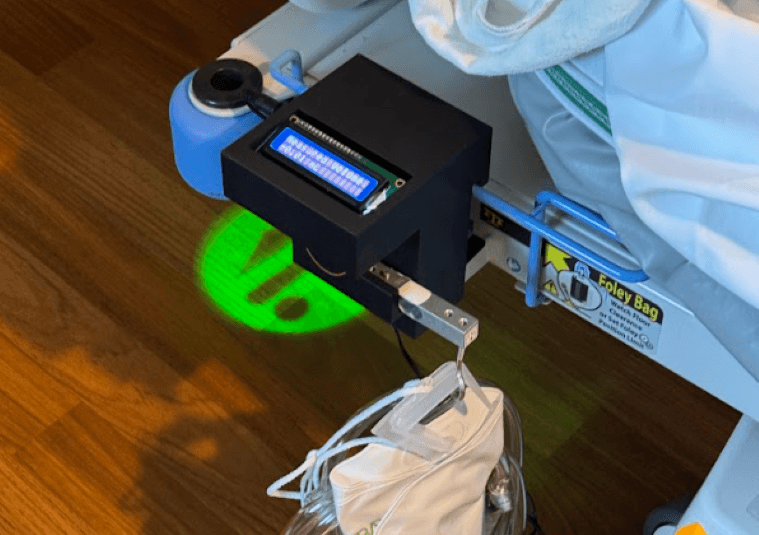
At UF Health Shands Hospital, nurses monitor long-term urine output for critical care patients across multiple shifts. The existing workflow required staff to detach a Foley bag, carry it to a separate weighing station in another room, reattach it to the patient, then manually record results into the EHR, a fragmented process that was time-intensive and prone to handoff errors.
As Design Captain for the Biofluid Analyzer team in Dream Team Engineering, I led a 5-person team in partnership with an internist at UF Health Shands to design a compact, bed-rail–mounted device that continuously measures Foley bag mass and converts it into urine volume at the bedside. We delivered an integrated prototype for benchtop and clinical evaluation, and after final delivery the physician initiated a formal pilot study to compare the device’s efficacy and efficiency against the standard workflow.
User Research
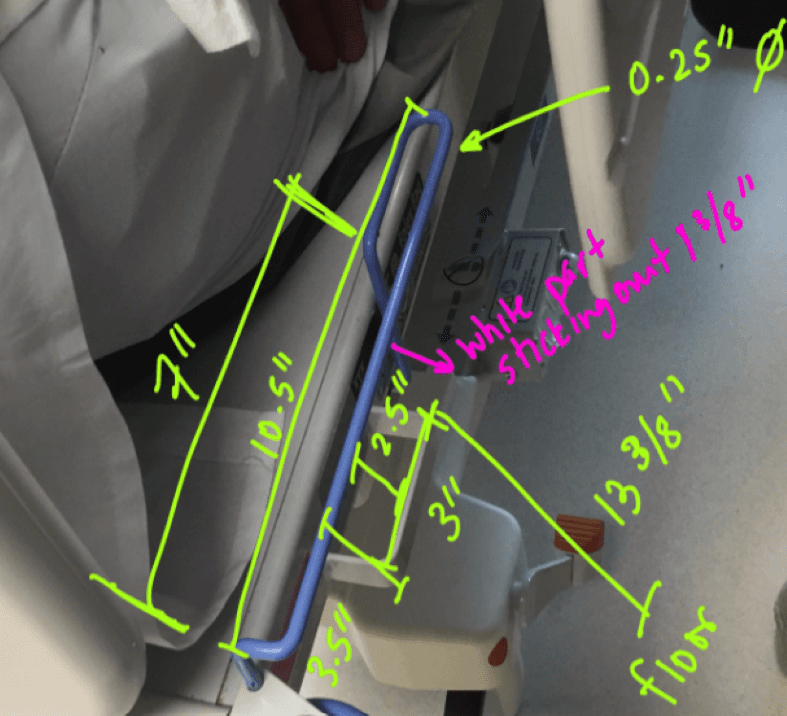
As Design Captain, I began the project by embedding directly into the clinical environment to understand the real workflow nurses followed when recording long-term urine output. I walked through the end-to-end routine with nursing staff across shifts, observing how Foley bags were detached, transported to a separate weighing station, reattached to the patient, and manually logged into the EHR. Through these conversations and observations, I identified key pain points around time burden, handoff errors, and workflow fragmentation. I then took bedside measurements directly from hospital beds and rails to define the physical constraints and accessibility requirements that informed our device dimensions, mounting strategy, and placement within the patient care ecosystem.
Ideation
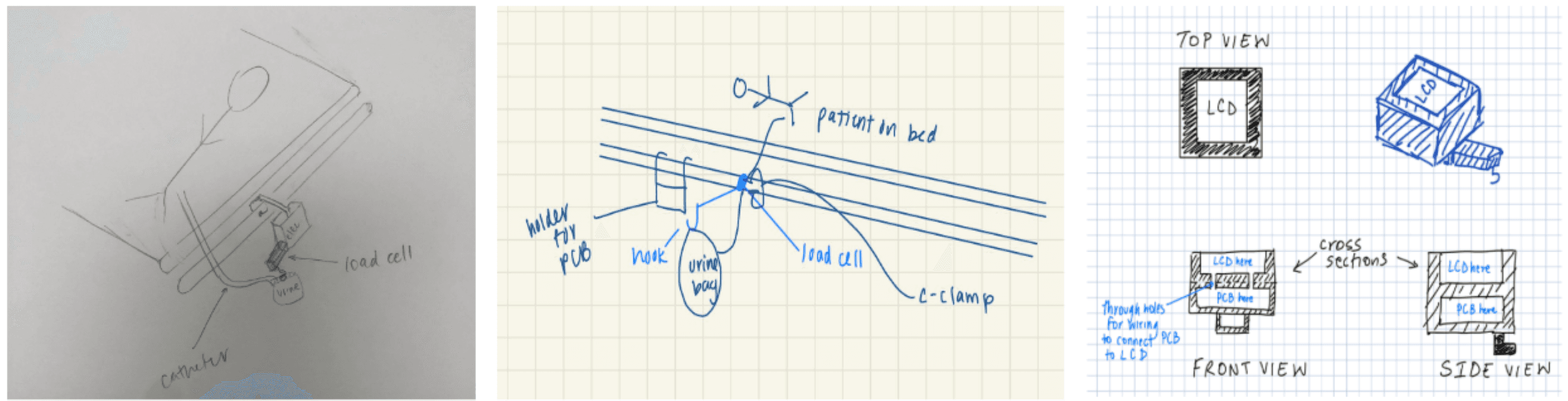
Building on insights from clinical workflow immersion, I led the team through an early ideation phase to define what the device needed to do, how it should attach to the bed rail, and how nurses would interact with it at the bedside. I drove sketch-based exploration to evaluate enclosure form factors, mounting strategies, and component placement, focusing on accessibility, visibility, and minimal disruption to patient care. These sketches helped converge on a compact bed-rail–mounted concept that integrated a load cell for Foley bag mass measurement, onboard electronics for data processing, and an LCD for continuous urine output display, establishing the system architecture that guided downstream CAD and prototyping.
Mechanical Design and Iterations
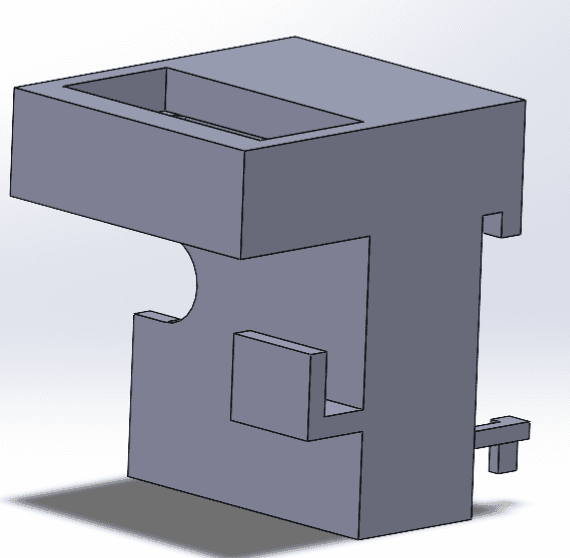
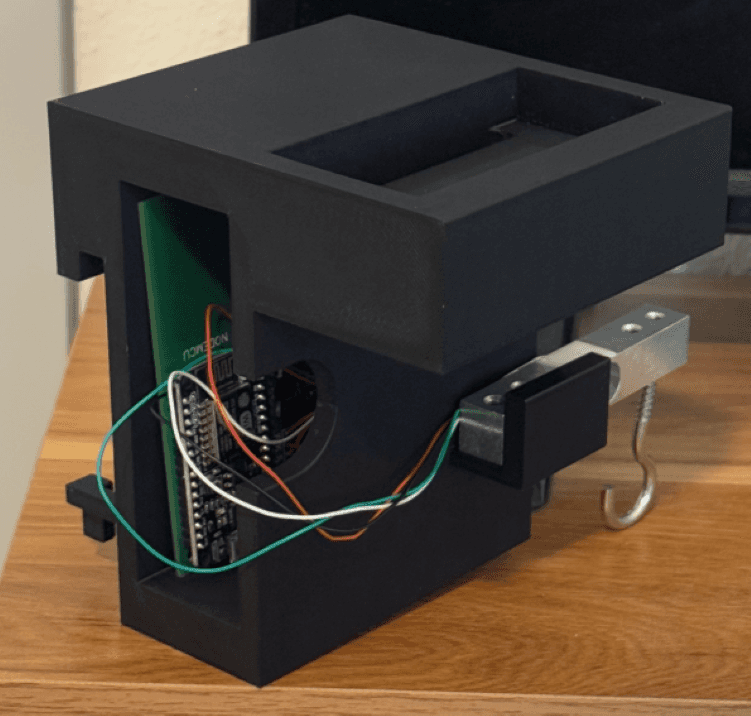
Using the early sketches as a foundation, I translated the selected concept into a detailed CAD model in SolidWorks, defining the enclosure geometry, mounting features, and internal component layout. I made deliberate design decisions around how the device would interface with the bed rail, including orienting the load cell slot parallel to the bedside to reduce the risk of accidental contact during routine patient care. The CAD model served as the reference for dimensional tolerancing, component fit, and downstream prototyping, ensuring the design remained compact, nurse-accessible, and compatible with the clinical environment.
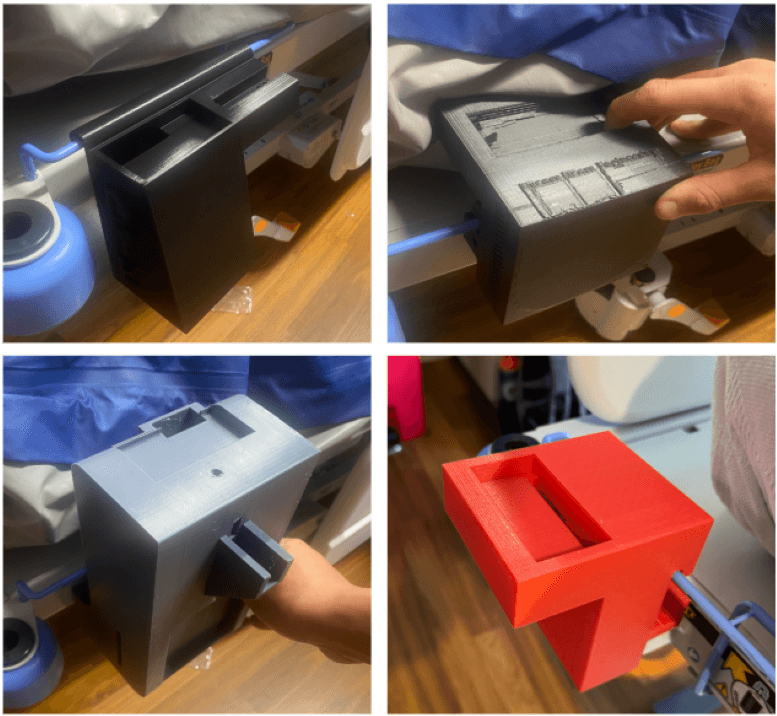
In parallel, I led the team through an independent design-and-build phase where each member developed their own bedside attachment concept, modeled it in CAD, and produced a 3D-printed prototype. We evaluated all prototypes directly in the hospital, testing for fit, stability, ergonomics, and ease of interaction with the bed rail and Foley bag under real use conditions. Based on hands-on testing and clinician feedback, we converged on the design I developed (printed in red PLA), which demonstrated the most secure attachment to the bedside and the most stable weight distribution when the Foley bag was loaded, making it the best candidate for continued iteration and clinical use.
Electrical Design
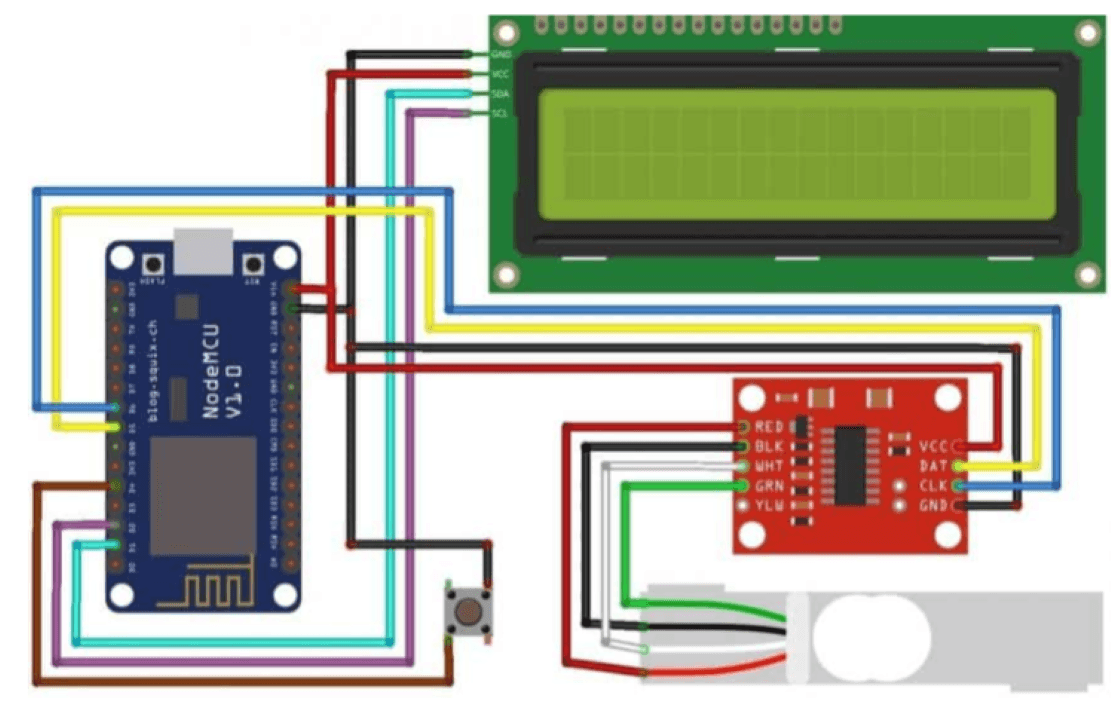
I led the electrical system design to support accurate bedside weight measurement, real-time volume conversion, and continuous user-facing display within a compact enclosure. The system was built around a 5 kg load cell paired with an HX711 instrumentation amplifier to capture high-resolution mass measurements, interfaced with an ESP8266 NodeMCU for computation and control. An I2C-based LCD display provided continuous bedside readout, while a dedicated push button enabled on-demand taring to support nurse workflows. The circuit was initially assembled on a breadboard using jumper wiring to enable rapid iteration and calibration before enclosure integration, with a transformer-based power supply selected to support stable operation in a clinical environment.
Code Architecture and Embedded Software
The embedded codebase was structured to support calibration, repeatable mass-to-volume conversion, and real-time bedside feedback using the HX711 sensing stack.
Load cell calibration: Implemented a serial-based calibration routine using the HX711 library, allowing dynamic adjustment of the calibration factor and taring to establish an accurate baseline before clinical use.
Mass acquisition: Sampled load cell readings using averaged measurements to reduce noise and improve repeatability across Foley bag weight ranges.
Mass-to-volume conversion: Converted measured mass into urine volume using a calibrated density-based conversion, enabling direct volume readout in milliliters rather than raw weight values.
Bedside display: Drove a 16×2 I2C LCD to present continuous, human-readable urine output at the bedside without requiring external devices.
Shipping the MVP
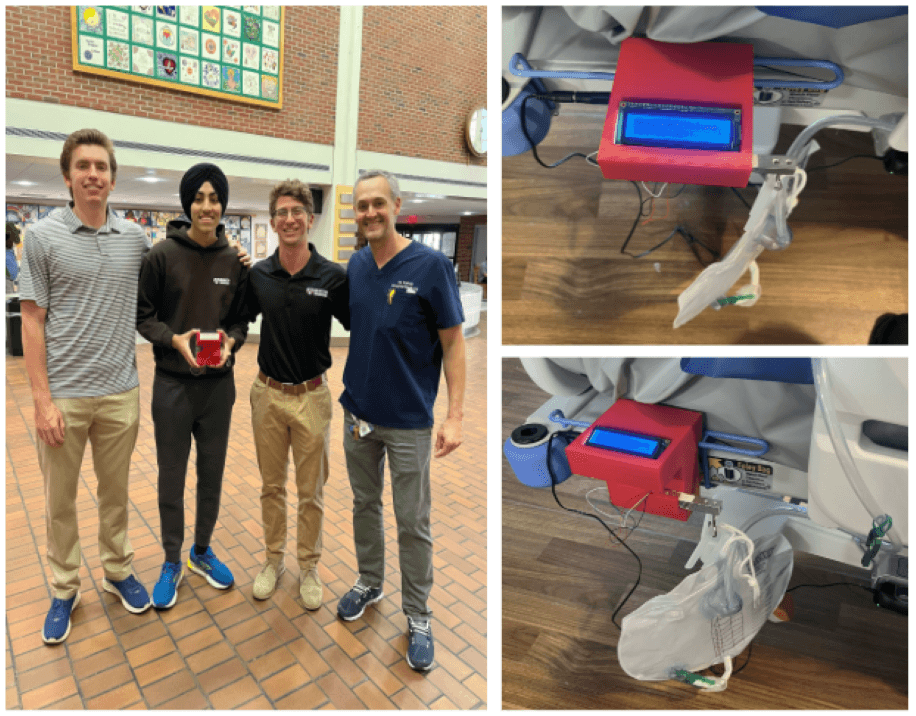
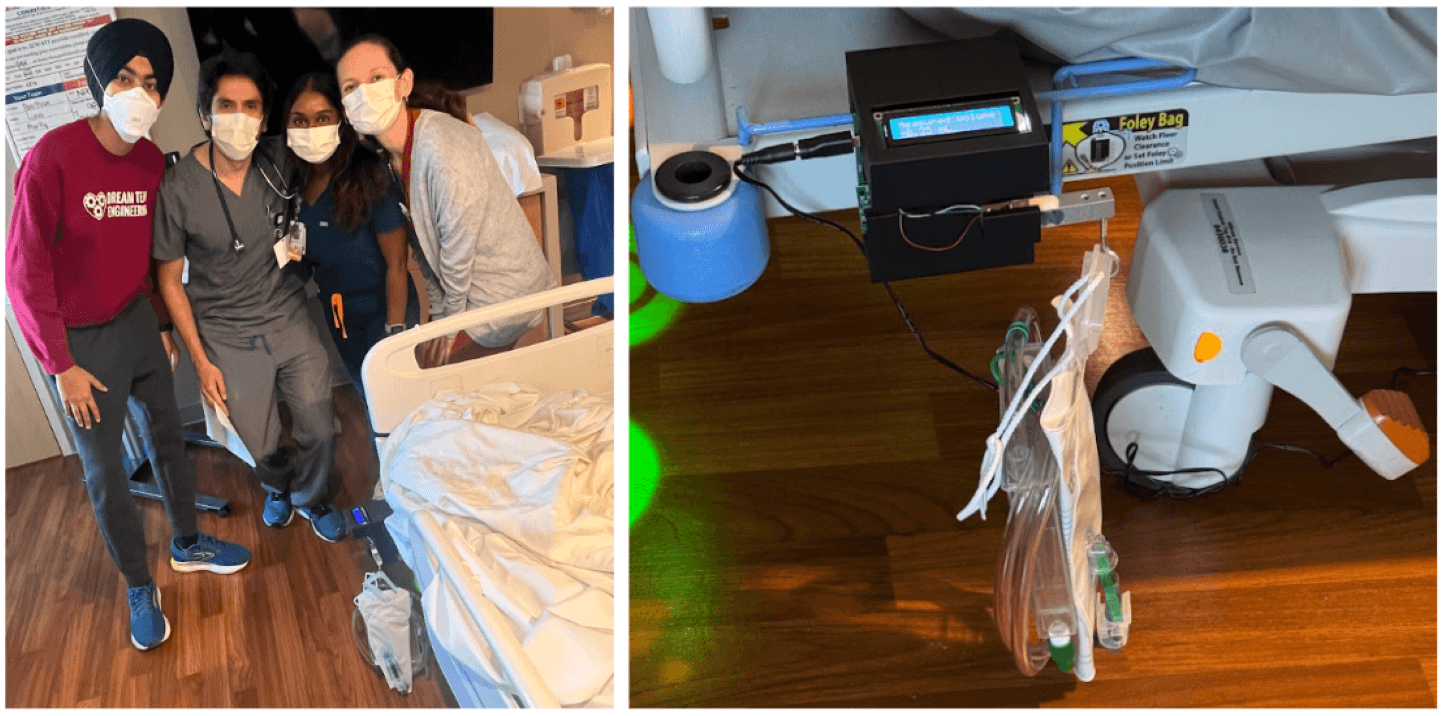
After completing bench validation, I led the delivery and in-hospital deployment of the MVP at UF Health Shands Hospital for bedside evaluation. I coordinated the handoff with the physician sponsor and nursing staff, ensuring the device was installed on active patient beds and used within the existing care workflow. During this phase, we observed real-world usage, gathered structured feedback from clinicians, and evaluated ergonomics, readability, and interaction under clinical conditions.
Clinical Feedback and Iteration
During in-hospital use across multiple units, real-world handling revealed durability limitations in the initial enclosure, particularly at the bed-rail attachment points where repeated mounting and removal introduced wear and localized stress. Based on this feedback, I led a targeted design iteration to reinforce high-load regions and reprint the enclosure using medical-grade PLA better suited for repeated clinical handling and cleaning. This iteration improved structural robustness while preserving the original form factor and bedside accessibility, ensuring the device could withstand sustained clinical use without compromising usability.
Clinical Deployment & Pilot Study
Following the durability iteration, I led the final delivery and installation of the device for active use within UF Health Shands Hospital. After observing its integration into daily nursing workflows, the physician sponsor initiated a formal pilot study to evaluate the device’s impact on the efficiency and accuracy of urine output data collection for long-term patients. I collaborated directly with the physician to outline study objectives and usage protocols, and we discussed pathways for expanding the device’s deployment across additional departments and units within the hospital. This phase marked the transition from prototype validation to clinical evaluation and adoption planning.
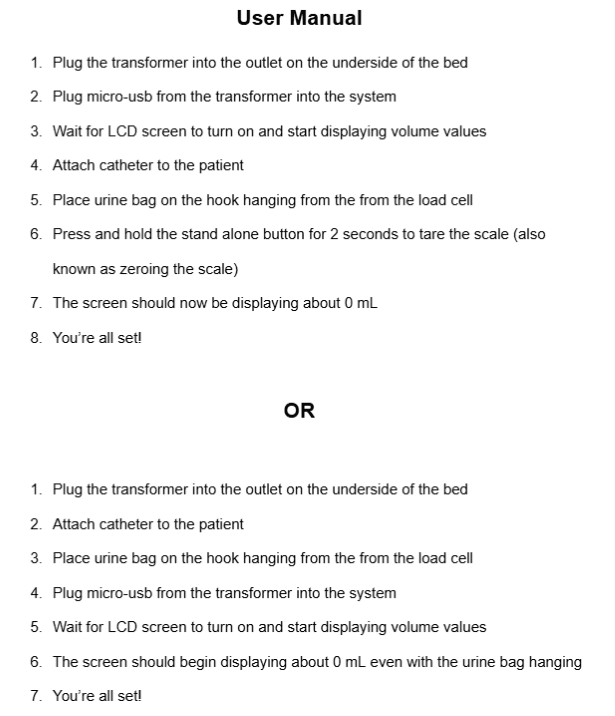
As part of the clinical deployment effort, I authored a comprehensive user manual to support onboarding of new clinicians using clear, customer-facing language. The documentation covered end-to-end device setup, operation, validation checks, and troubleshooting, enabling nursing staff to adopt the device consistently across shifts and units without direct engineering support. This ensured safe, repeatable use in a clinical environment and reduced friction during early adoption and pilot study rollout.
Functional Demonstration
Future Iterations
Bed Angle Compensation (Gyroscope Integration): Integrate an inertial sensor to account for bed inclination, enabling more accurate mass-to-volume measurements when patient beds are raised or repositioned during care.
EHR Integration (Epic): Interface the device with Epic to automatically log urine output data into the patient record, eliminating manual transcription and reducing the risk of documentation errors across shifts.
Improved User Interaction: Redesign the physical reset mechanism to make taring and interaction more intuitive for clinicians wearing gloves, improving usability during bag changes and routine checks.
Cable Management & Wire Concealment: Refine internal routing and enclosure features to better manage and conceal wiring, improving durability, infection control, and overall bedside aesthetics.
Other projects

Arco: Transformable Desk for Small-Space Living
Arco is a configurable desk system designed for students living in small spaces, created to help people physically and mentally transition between modes throughout the day.
Autonomous Car
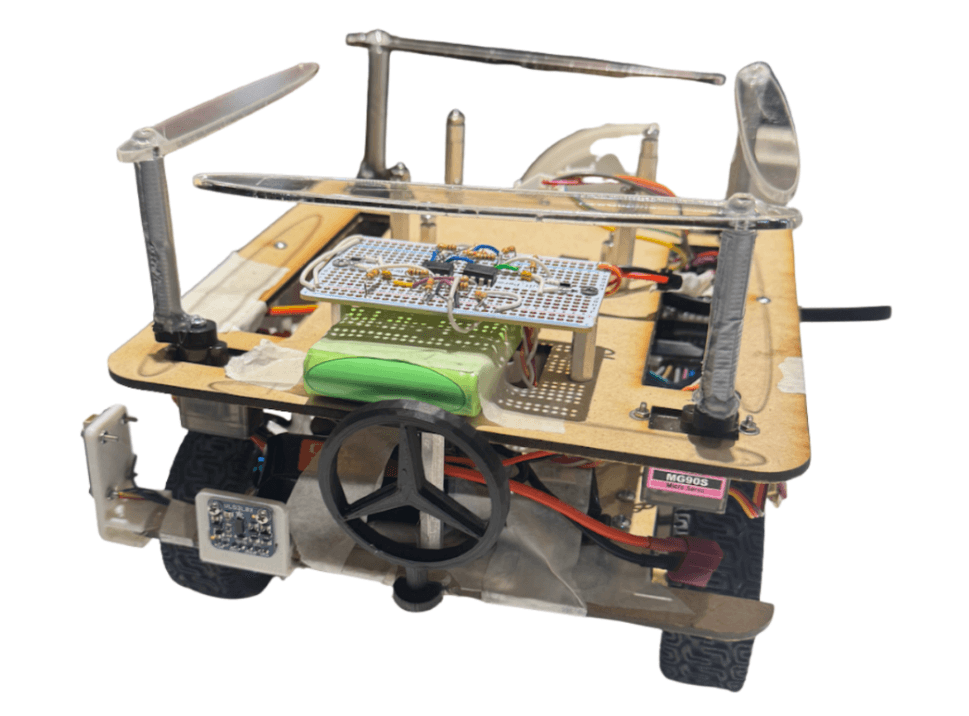
Designing and building an autonomous mobile robot with real-time control, localization, and sensing, from system architecture to competition-ready deployment.
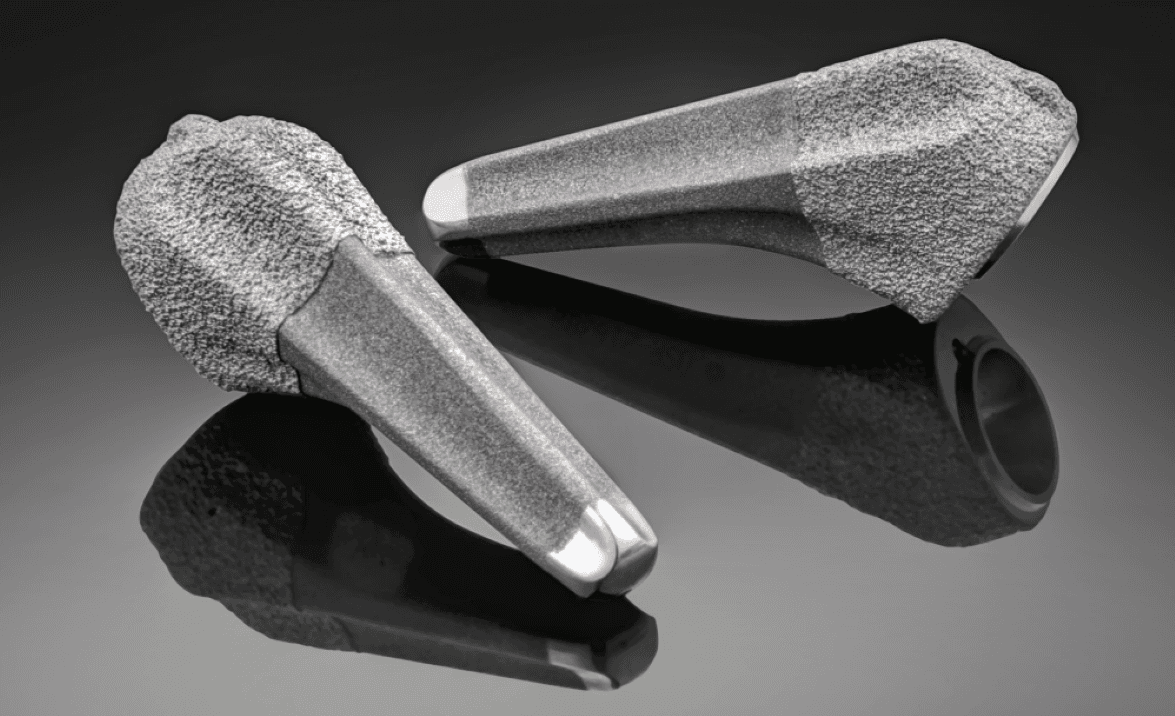
Orthopedic Product Development at Exactech
Led surgeon-driven instrument and implant development across CAD, DFM, testing, manufacturing, and 510(k) support through 7 concurrent projects.

Product Growth at PrimeEventZ
Leading product definition and real-world deployment of PrimeEventZ, an AI-powered platform unifying event operations from planning through execution at any scale.